
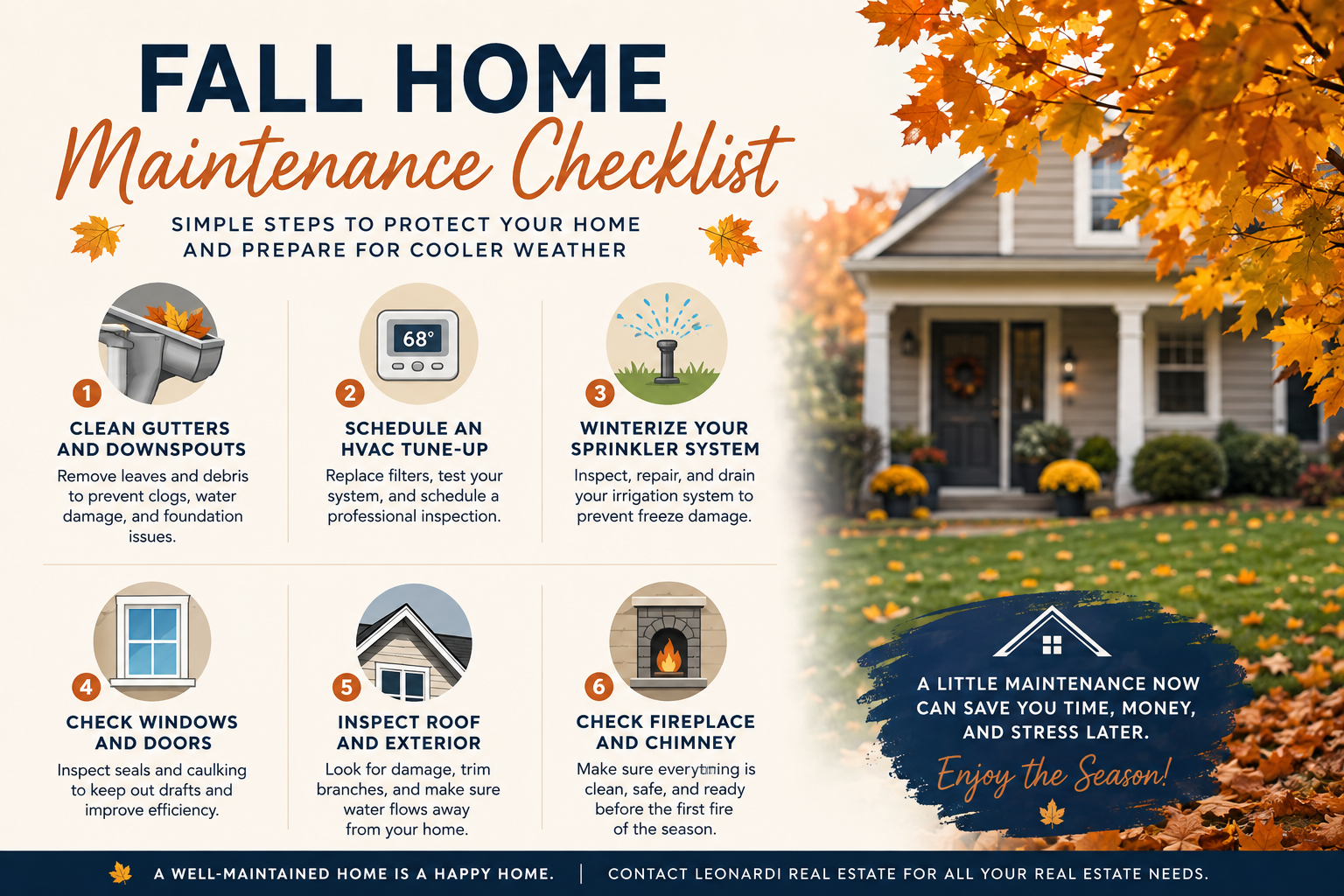
Fall officially begins Tuesday, making now a great time to take care of a few important home-maintenance projects before cooler temperatures and rainy weather arrive. A little preventive maintenance now can help homeowners avoid unexpected repairs, improve energy efficiency, and keep their homes in good condition throughout the fall and winter months.
Here’s a simple fall maintenance checklist to help get your home ready for the season.
1. Clean Gutters and Downspouts
Leaves, dirt, and debris can quickly build up in gutters. Once the rainy season begins, clogged gutters can cause water to overflow and potentially damage roofing, siding, landscaping, and areas around the foundation.
- Remove leaves and debris from gutters.
- Flush gutters with water to make sure they drain properly.
- Check for loose, damaged, or sagging sections.
- Make sure downspouts are securely attached.
- Direct downspout water away from the home’s foundation.
- Inspect the roofline for any obvious signs of damage while you’re there.
Tip: If your home is surrounded by mature trees, gutters may need to be checked more than once during the fall.
2. Schedule an HVAC Tune-Up
Your heating system may have been sitting mostly unused for months. Before you need it regularly, fall is a good time to make sure everything is operating properly.
- Replace or clean the HVAC filter.
- Test the heating system before the first cold night.
- Check vents and registers for dust or obstructions.
- Make sure exterior HVAC equipment is clear of leaves and debris.
- Consider scheduling a professional HVAC inspection and tune-up.
Routine HVAC maintenance can help your system operate efficiently and may identify smaller problems before they turn into more expensive repairs.
3. Winterize Your Sprinkler and Irrigation System
Northern California winters are relatively mild, but freezing temperatures can still occur. Exposed irrigation components are particularly vulnerable.
- Adjust watering schedules as temperatures cool and seasonal rainfall begins.
- Inspect sprinkler heads for leaks or damage.
- Repair broken or leaking irrigation lines.
- Insulate exposed pipes, valves, and backflow components where appropriate.
- Shut down or winterize irrigation equipment according to the manufacturer’s recommendations.
- If your system requires draining or blowout procedures, consider having an irrigation professional perform the work.
Avoid assuming that simply turning off the irrigation controller completely winterizes the system. Different irrigation systems have different requirements.
4. Check Windows and Exterior Doors
Small gaps around doors and windows can allow drafts and moisture into the home.
- Inspect weatherstripping around exterior doors.
- Check caulking around windows and exterior openings.
- Replace damaged or deteriorated seals.
- Make sure doors and windows close and lock properly.
These relatively inexpensive fixes can also help reduce heat loss during colder weather.
5. Inspect the Roof and Exterior
You don’t necessarily need to climb onto the roof to perform a basic seasonal check. Walk around the property and look for anything that appears damaged or out of place.
- Look for missing, lifted, or damaged roofing materials.
- Check flashing around visible roof penetrations.
- Inspect siding and exterior trim.
- Look for peeling paint, cracks, or openings where water could enter.
- Trim tree branches that are touching or hanging dangerously close to the roof.
If you notice something concerning, have it evaluated by a qualified roofing or home-maintenance professional.
6. Prepare Outdoor Areas
Fall is also a good time to protect outdoor living spaces and equipment.
- Clean and cover outdoor furniture as needed.
- Inspect fences and gates.
- Check exterior lighting.
- Clean patios and walkways.
- Store seasonal tools and equipment.
- Check exterior faucets and hoses before freezing temperatures arrive.
7. Test Smoke and Carbon Monoxide Alarms
As heating systems and fireplaces begin seeing more use, fall is an excellent time for a safety check.
- Test smoke alarms.
- Test carbon monoxide alarms.
- Replace batteries when needed.
- Replace alarms that have reached the end of their recommended service life.
- Review the manufacturer’s instructions for testing and replacement intervals.
8. Have the Fireplace and Chimney Checked
If you have a wood-burning fireplace that you plan to use this winter, make sure it is ready before lighting the first fire of the season.
- Check the fireplace for visible damage.
- Make sure the damper operates correctly.
- Clear combustible materials from around the fireplace.
- Consider a professional chimney inspection and cleaning when appropriate.
9. Walk Around Your Property After the First Heavy Rain
One of the best times to spot drainage problems is while it’s actually raining or immediately afterward.
Look for:
- Water pooling near the foundation.
- Overflowing gutters.
- Downspouts that aren’t draining properly.
- Standing water in landscaping.
- Water flowing toward rather than away from the house.
Catching drainage problems early can help prevent much larger problems later.
A Little Maintenance Now Can Go a Long Way
Homes require ongoing care, and seasonal maintenance is one of the easiest ways to stay ahead of potential problems. Taking a weekend to inspect gutters, HVAC equipment, irrigation, drainage, and exterior components can help prepare your home for the months ahead.
And if you’re considering selling your home in the coming months, staying on top of routine maintenance can also help your property show better and reduce the number of deferred-maintenance items that may come up during a buyer’s inspection.
Thinking about buying or selling a home?
Leonardi Real Estate® has been helping clients throughout the Greater Sacramento region make informed real estate decisions for decades. Contact us anytime to discuss your real estate plans.
This article is provided for general informational purposes only and is not intended as professional construction, HVAC, roofing, plumbing, irrigation, or home-inspection advice. Homeowners should consult appropriately licensed professionals regarding the specific maintenance needs of their property.